If your boiler won’t turn on, the cause is often something you can fix yourself in minutes. Check the power supply and fuse box, confirm your gas is working, and make sure your thermostat is set above room temperature. Low water pressure, a frozen condensate pipe, and a tripped reset button are also common culprits. If the system still won’t fire after these checks, call a Gas Safe registered engineer.
Waking up to a cold home is never a pleasant experience. You head to the radiator or the tap, only to find that your home is freezing and there is no hot water. When your boiler won’t turn on, it is natural to feel a sense of panic. You might immediately worry about the cost of a new system or the hassle of finding a local engineer during a busy winter period.
However, a boiler that refuses to start does not always mean it is broken. Modern heating systems, such as a combi boiler, are complex, but they are also designed with various safety sensors. Sometimes, the boiler has simply shut itself down because of common boiler problems or a minor external factor that you can fix yourself in just a few minutes.
This guide acts as a first-aid kit for your heating emergencies. We will walk through seven safe and non-technical checks you can perform before you need to pick up the phone. By following these steps, you might save yourself the cost of a call-out fee and get your heating back up and running immediately. For more detailed troubleshooting specifically for combi boilers, check out our combi boiler troubleshooting guide.
1. Check Your Power Supply and Boiler Controls
It sounds obvious, but many boilers that appear broken are simply not receiving power. Like any other large appliance, your boiler needs electricity to run the pump, the fan, and the internal boiler controls.
Inspect the Fuse Spur
First, check the fuse spur. This is usually a small switch located on the wall near your unit. It often has a red neon light. If this switch has been accidentally knocked or turned off, the system will not have any power. Ensure it is switched to the “on” position.
Check the Consumer Unit
Next, take a look at your main consumer unit or fuse box. Look for any switches that have flipped down. If a circuit has tripped, it might have cut power to the entire heating system. If you use a prepayment meter for your electricity, double-check that you have not run out of credit. Even if you have gas, the burner cannot ignite without an electrical spark.
2. Inspect the Gas Supply and Pilot Light
If the power is on but the system still won’t fire, the problem may lie with your gas supply.
Confirm Your Gas Supply Is Active
The quickest way to test this is to try your gas hobs or cooker. If the hobs are not working either, the issue is with your gas supply rather than the boiler itself. Check that your gas meter is not in emergency credit mode. If you have a prepayment gas meter, top it up and wait a few minutes before trying to restart the system.
Check the Pilot Light (Older Models)
If your unit is an older model with a standing pilot light, check that the small flame is lit. If it has gone out, follow the manufacturer’s instructions to relight it. Most modern condensing units no longer use a standing pilot light, so if you have a newer system, you can skip this step.
3. Identify Thermostat Issues
The thermostat is the brain of your heating system. It tells the unit when to turn on and off based on the temperature of your home. If the settings are incorrect, the system will simply stay dormant because it thinks the house is already warm enough.
Temperature Settings
Start by turning your thermostat up to a high temperature, such as 25°C. If the system fires up, then the common causes were simply that the thermostat was set too low.
Battery and Clock Issues
Wireless thermostat issues often stem from dead batteries. Try replacing them with fresh ones to see if the connection is restored. You should also check the clock or timer on the unit. Following a power cut or the clocks changing, the internal timer can get confused. If the system thinks it is 3:00 am when it is actually 8:00 am, it might not turn on because it is following a night-time schedule.
4. Monitor Water Pressure and Radiators
Low pressure is one of the most common causes a boiler won’t turn on. Central heating systems are sealed, meaning they rely on a specific amount of water pressure to push heat around your radiators. If you’re experiencing ongoing pressure issues, our guide on why boiler pressure keeps dropping can help you identify the root cause.
The Pressure Gauge
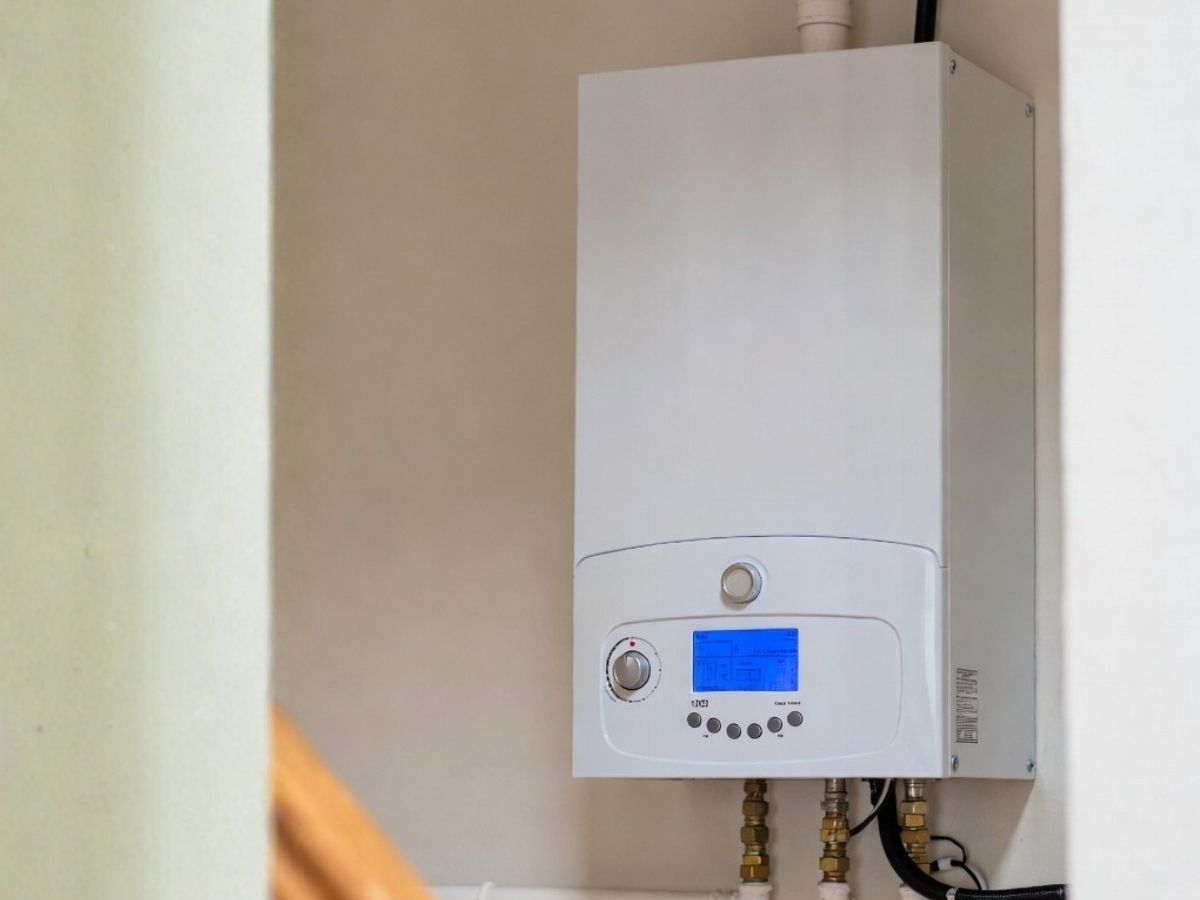
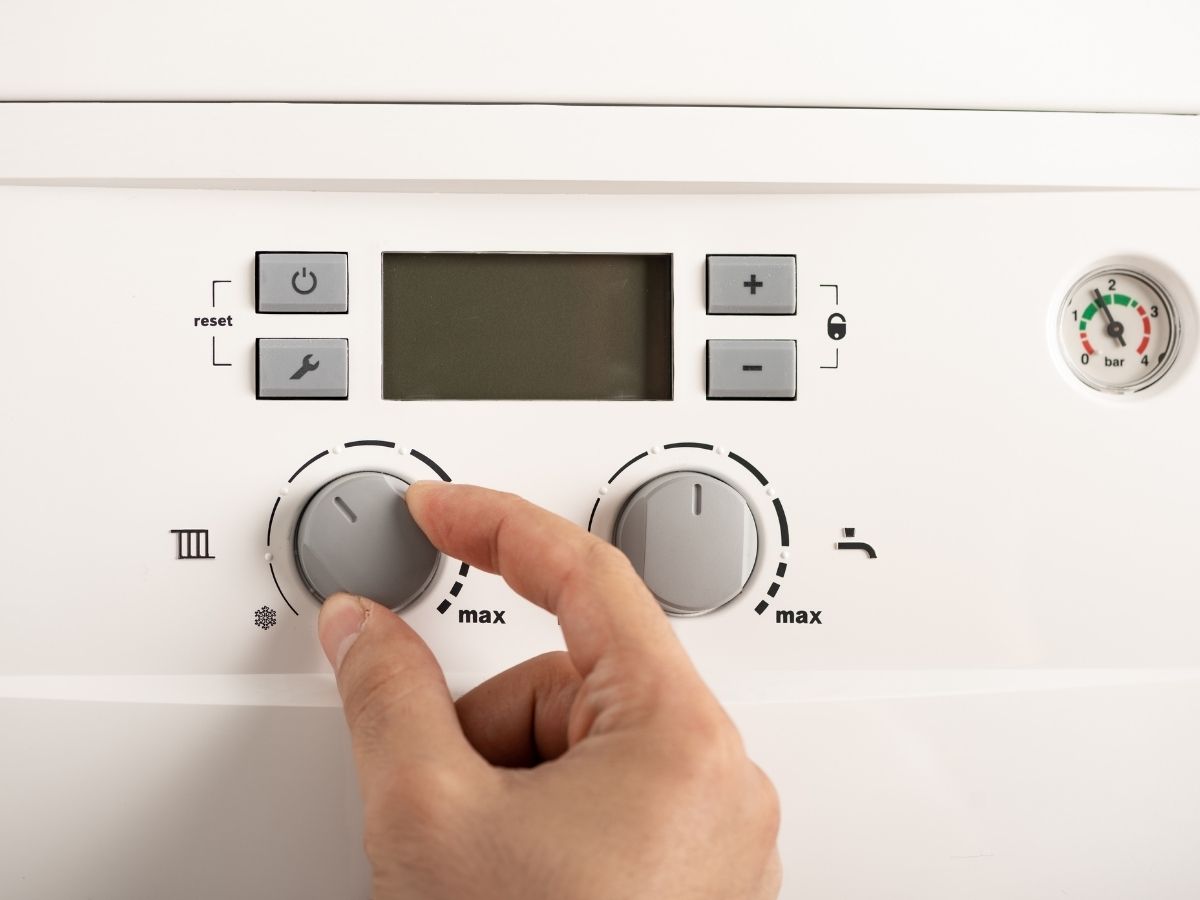
You can check this by looking at the pressure gauge on the front of your unit. It is usually a small circular dial with a needle. For most UK systems, the needle should be pointing somewhere between 1 and 1.5 bar. If the needle has dropped below 1, indicating boiler pressure issues, your system will shut down to prevent damage to the internal pump.
How to Top Up the Pressure
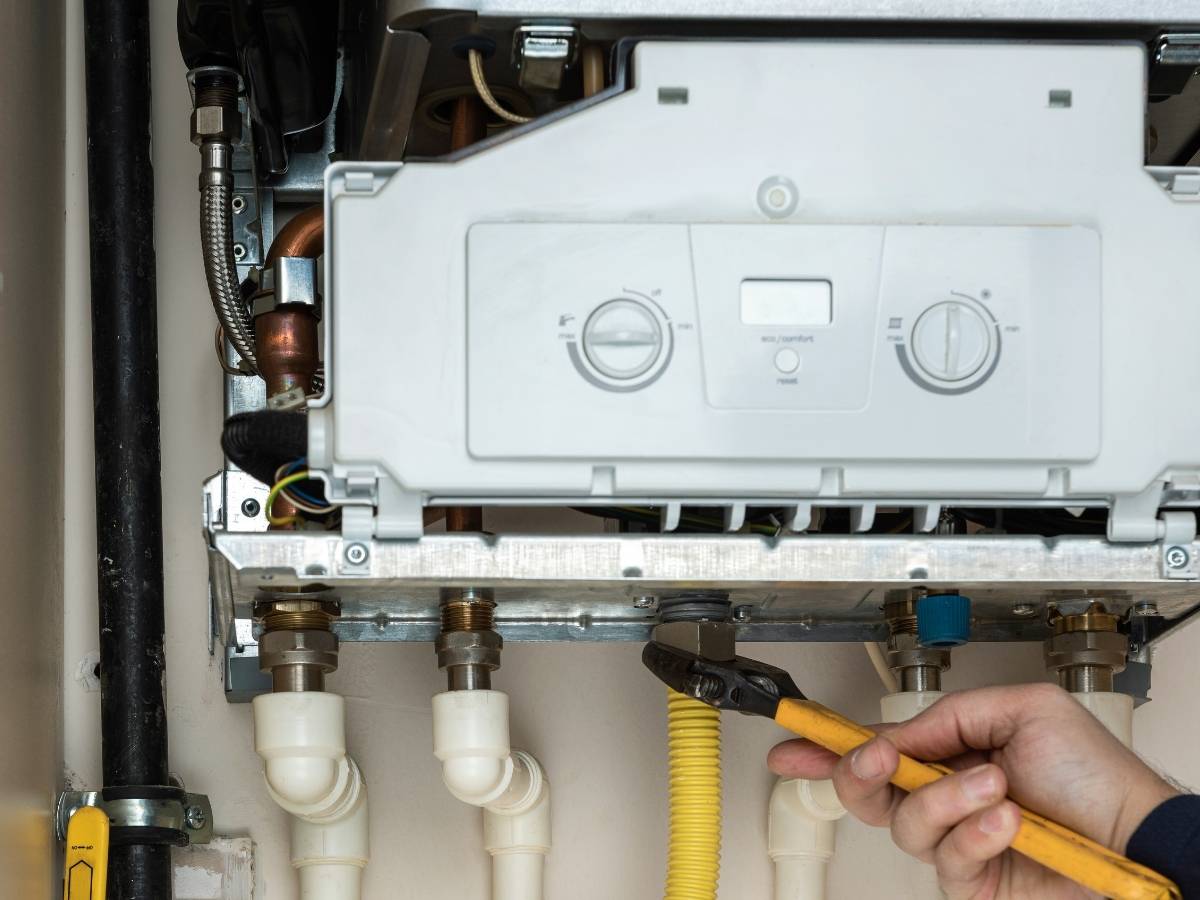
If the gauge is reading below 1 bar, you need to repressurise the system. You can do this using the filling loop — a flexible braided hose that connects the cold water mains to the heating system. Open the valves slowly until the gauge reaches the correct level. Once the water pressure is restored, the system should start again. If you find a radiator cold after the system fires up, they may also need bleeding to remove trapped air.
5. Thaw a Frozen Condensate Pipe
If it is freezing cold outside and your heating has stopped working, the culprit might be a frozen pipe. Modern energy-efficient units produce a small amount of waste water during the heating process. This water travels through a plastic pipe, known as the condensate pipe, which usually leads outside to a drain. A boiler condensate pipe leaking or freezing is more common during cold snaps and easy to miss if you do not know what to look for.
Identifying the Blockage
Because this pipe carries water outdoors, it can freeze during a cold snap. When the pipe becomes blocked with ice, the waste water backs up into the unit, causing it to shut down for safety. You might hear a gurgling sound coming from the system if this is happening.
The Safe Fix
You can often fix this by pouring warm water (not boiling water) over the external plastic pipe to melt the ice inside. Once the blockage clears, you can restart the system. As a preventive measure, you can insulate the external pipe to reduce the risk of it freezing again in future cold weather.
6. Listen for Unusual Boiler Noises and Reset the System
Modern heating systems have a reset button. If your unit has encountered one of several common issues, a simple reset can often clear the error. However, you should only try this once or twice. If the boiler locks again, it means there is a genuine fault that needs professional attention. If you notice unusual noises from your boiler — such as banging, whistling, or gurgling — before or after attempting a reset, note them down as they can help an engineer diagnose the problem faster.
Common UK Models
- Worcester Bosch: Many models have a “Reset” button on the front panel. On older models, you may need to turn the temperature dial to the “Reset” position for a few seconds.
- Vaillant: Look for a button with a flame symbol with a cross through it. Press and hold this for several seconds.
- Ideal: These units usually have a reset button clearly labelled on the display. Simply press it once and wait for the system to restart.
If a reset does not work, consult your boiler manual for an error code. This will usually be a combination of letters and numbers, such as F22 or E110. Write this code down to help an engineer diagnose specific problems. For a full breakdown of what common error codes mean, our combi boiler fault finding guide explains what each code signals and what action to take.
7. Quick Diagnostics Flowchart
If you are still stuck, use this simple logical sequence to find the potential reasons for the failure:
- Power: Does the display have any lights? If no, check the fuse spur and the fuse box.
- Gas: Do your gas hobs work? If no, check your meter and credit.
- Boiler Pressure: Is the dial between 1 and 1.5 bar? If it is at low pressure, top up the water using the filling loop.
- Thermostat: Is it set higher than the room temperature? If no, turn it up.
- Weather: Is it freezing outside? If yes, check the external condensate pipe for ice.
When to Call a Professional
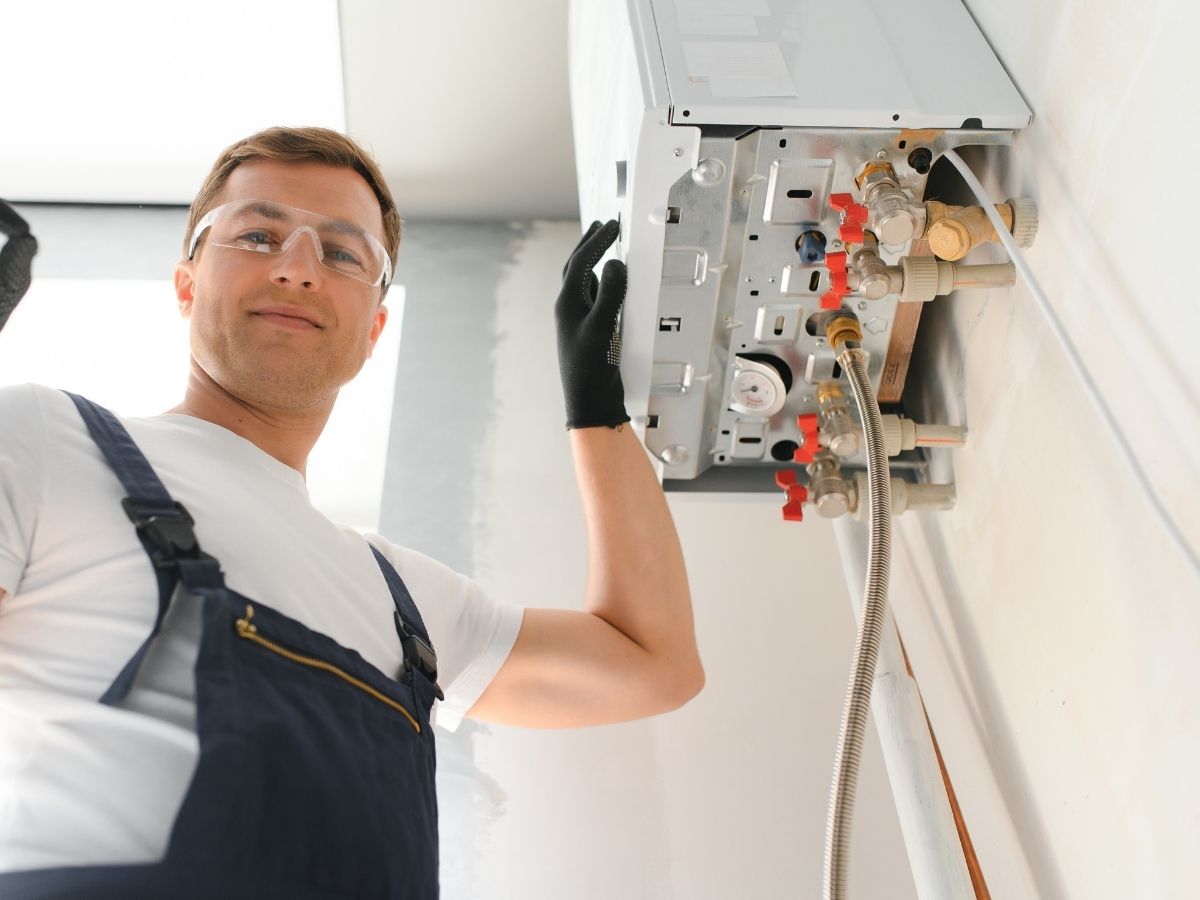
If you have tried all of the steps above and your system still won’t turn on, it is time to call in a professional. There are many internal components, such as a faulty fan, the air pressure switch, or a cracked heat exchanger, that can fail over time.
You should never attempt to fix these internal problems yourself. Doing so is dangerous and can void your warranty. If your unit is leaking water, making loud banging noises, or showing a persistent error code that won’t clear, professional help is the only safe option. Our boiler repair service is available for all emergency heating issues.
Regular maintenance is the best way to avoid these emergencies. An annual boiler service ensures that your system is running at peak efficiency and allows an engineer to spot potential issues before they lead to a total breakdown. All work carried out by Premier Gas engineers is registered with the Gas Safe Register — the official body for gas safety in the UK.
Expert Heating Solutions in the North East
A boiler that won’t turn on is a major inconvenience, but as we have seen, the solution is often a simple fix that you can handle yourself. By checking your power, gas, thermostat, and water pressure, you can rule out the most common external problems in under ten minutes.
If your system remains unresponsive after these checks, you need a team you can trust. The Premier Gas team is a GasSafe Registered heating company based in Gateshead, Newcastle. With over 20 years of local experience serving homeowners across Newcastle and the North East — including Durham, Sunderland, and Gateshead — we provide fast, reliable results.
Book your expert repair today and we will have your heating back up and running as quickly as possible. If your unit is beyond economic repair, we can also discuss boiler replacement options and energy-efficient models to suit your home and budget.