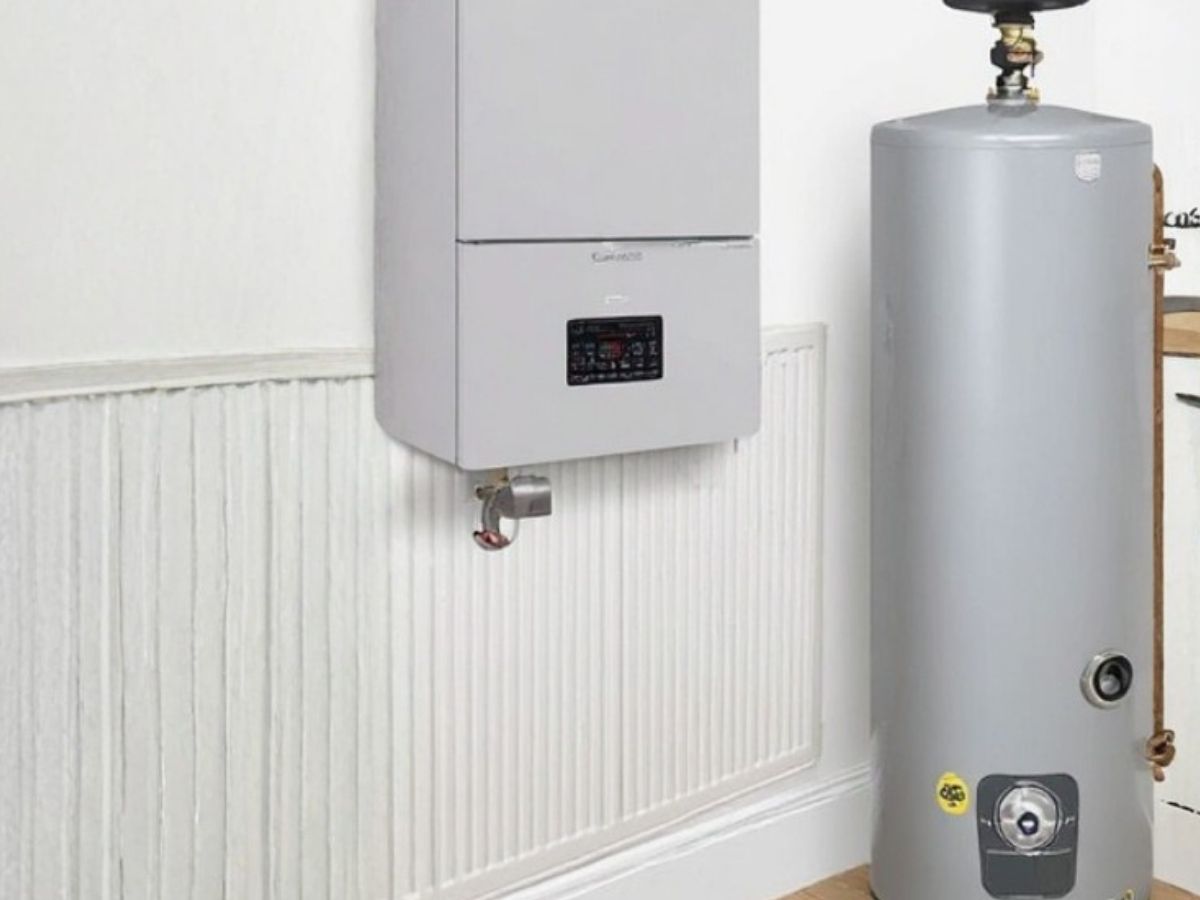
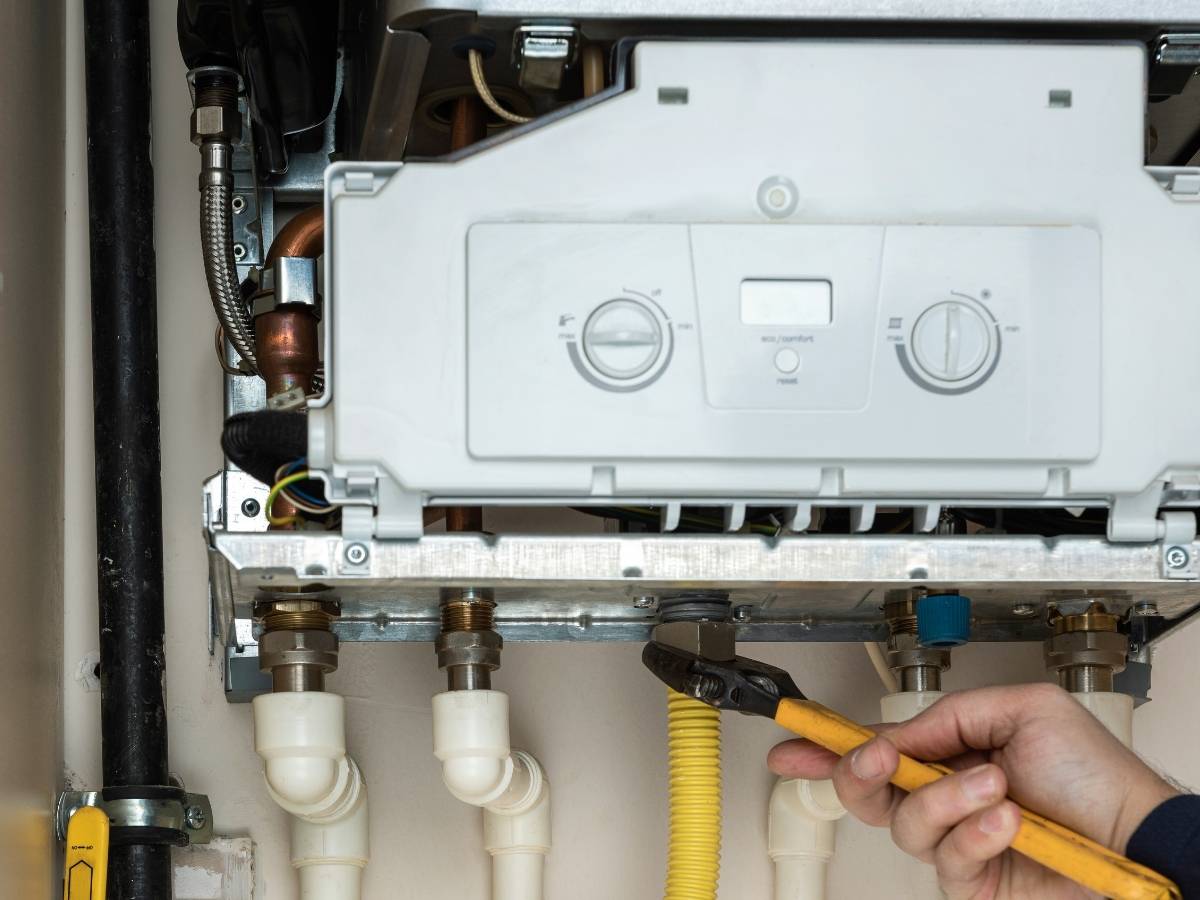
Choosing between a combi boiler and a hot water tank depends on your home size, water usage, and efficiency needs.
A combi boiler provides instant hot water and saves space, making it ideal for small to medium homes,
while a hot water tank delivers strong pressure and supports multiple bathrooms, making it better for larger households.
When it is time to replace your heating system, the combi boiler vs hot water cylinder debate is likely at the top of your mind. This choice is the most important part of any boiler installation. It affects your monthly energy bills, your daily shower experience, and even how much storage space you have in your home. At Premier Gas, we have spent over 20 years helping homeowners across Newcastle and Gateshead understand the advantages and disadvantages of these different types of systems to find the perfect fit.
Understanding the Combi Boiler: Instant Heat for Modern Living
A combination boiler, or “combi,” is the most popular choice for UK homes today. It is a single boiler unit that handles both your central heating system and your hot water. Unlike an old boiler setup, it does not need a large storage tank in the loft or a cylinder in the airing cupboard.
How it Works
The “combination” name comes from the fact that it combines two functions. It acts as a high-efficiency water heater and a central heating boiler in one compact box. When you turn on a hot tap, the boiler starts heating water directly from the mains supply. It uses a powerful heat exchanger to provide water on demand instantly as it flows through the unit. This means you do not have to wait for a large tank to heat up before you can take a bath. For a deeper look at specific models, you can compare combi vs condensing boilers to see which technology suits your property.
The Space-Saving Hero
One of the biggest reasons people in the North East switch to a combi is to save space. By removing the bulky hot water storage cylinder and the cold water tanks from the loft, you can reclaim valuable square footage. Many homeowners use this extra room to create a larger storage cupboard or even a small ensuite. Because the unit is small, it can usually be hidden away inside a standard kitchen cupboard. If you are worried about aesthetics, there are many clever ways how to cover a boiler to keep your home looking sleek.
Efficiency Benefits
Combi boilers are a masterclass in efficiency because they follow a “heat-on-demand” logic. With a traditional tank, you often heat 100 litres of water even if you only need a small amount for the dishes. This leads to energy waste as the unused water eventually cools down. With a combi, you only pay to heat the water you actually use. Most modern units are ErP A-rated, meaning they operate at over 90% efficiency.
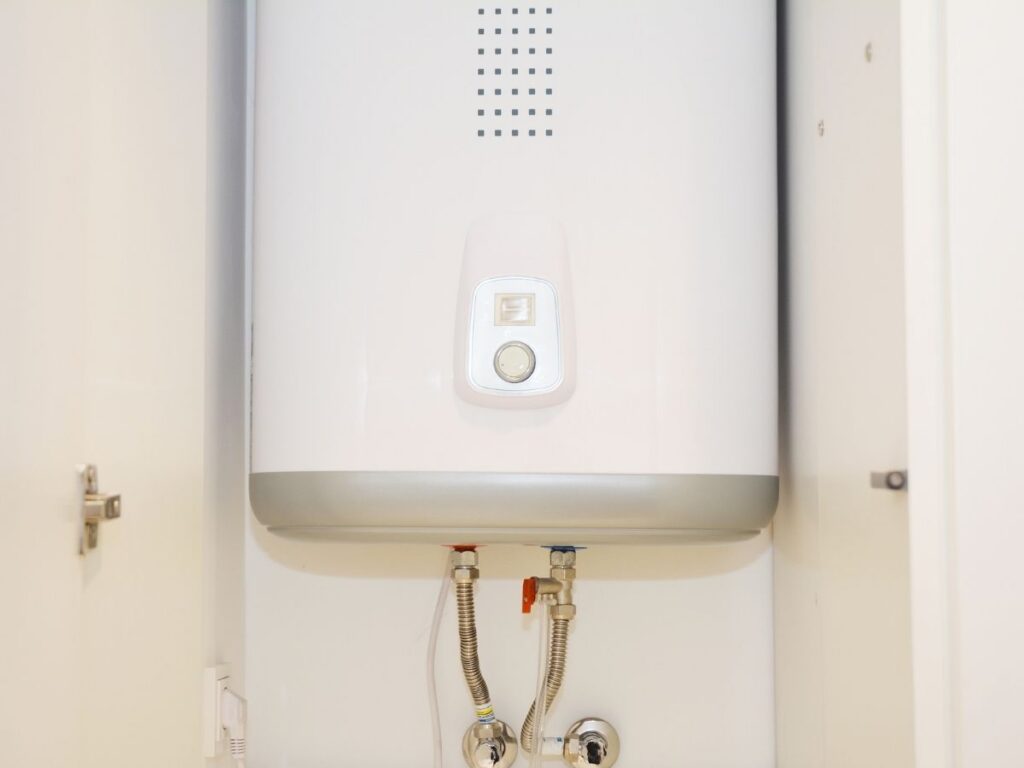
Combi Boilers: Best Suited For a Single Bathroom
Combi boilers are perfect for small to medium households. If you live in a flat or a house with one bathroom, a combi is often the best choice. It provides unlimited hot water whenever you need it without taking up much room. You can explore the best combi boilers for your homes to find a model that fits your specific budget.
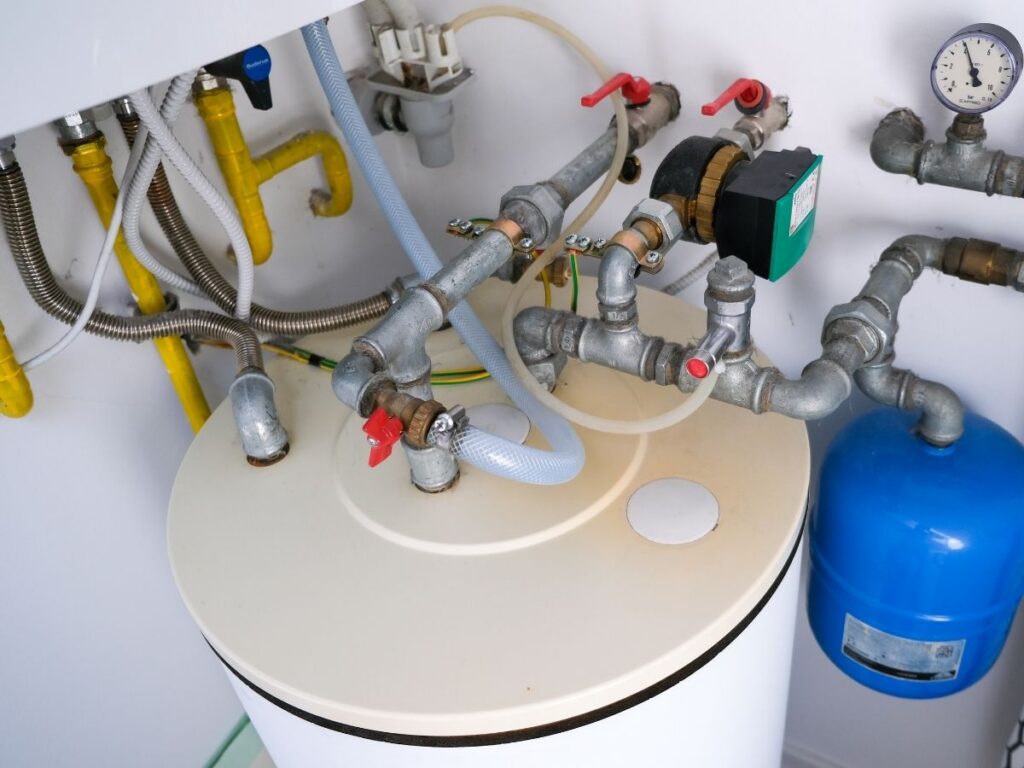
Stored Water Systems: Exploring Different Types of Boilers
While combis are popular, they are not always the right answer. Many larger properties in the North East still rely on a hot water storage cylinder. These systems store a large volume of hot water in an insulated tank, ready to be used at any time.
The Role of System Boilers and Conventional Boilers
If you have a cylinder, you likely have either a system boiler or a conventional boiler (also known as a regular boiler). These only boilers do not heat water for the taps directly. Instead, they send heat to a coil inside the cylinder, which then warms up the water stored there. This stored water is then sent to your taps and radiators when needed.
The Difference Between Unvented and Vented Cylinders
Older homes often have “vented” cylinders that rely on gravity. These usually have poor mains water pressure in the shower. Modern “unvented” cylinders connect directly to the water mains. This creates a high-pressure system that delivers a powerful flow of water throughout the entire house. If you want a hotel-style rain shower, an unvented cylinder is usually the best way to achieve it.
The Multi-Outlet Advantage
The biggest strength of a cylinder is its ability to supply hot water to multiple bathrooms and several hot water outlets at the same time. If someone is using the shower upstairs while another person turns on the kitchen tap, the water pressure and temperature will stay steady. A combi boiler struggles with this because it can only heat a certain amount of water at once, measured in litres per minute.
System Boilers: Best Suited For Large Families
We recommend system boilers for large family homes with high hot water usage. If your household has a high demand for hot water in the mornings across two or more bathrooms, a cylinder ensures nobody gets a cold shock in the shower. If you are seeing signs it’s time to replace your boiler, upgrading to a modern system boiler can be a life-changer for large households.
The Efficiency Showdown: Which Costs Less to Run?
Efficiency is not just about the boiler itself; it is about how you use it. Both systems have different strengths when it comes to your gas bill.
The Standby Heat Loss Factor
One of the main disadvantages of a cylinder is that it will always lose a little bit of heat over time. Even with the best thermal insulation, the water inside will slowly cool down if it isn’t used. This is called “standby heat loss.” Modern cylinders are very well-insulated to keep this to a minimum, but they are still slightly less efficient than a combi in this specific area.
Gas Consumption Trends
A combi boiler uses a large “burst” of gas to heat water instantly. A cylinder-based system uses a smaller, steady amount of gas to heat the tank over a longer period. If you use very little hot water, the combi is cheaper. However, if you have a large family using lots of water, the difference in cost becomes much smaller.
ErP Ratings
Always check the ErP (Energy-related Products) label. Whether you choose a combi or a system boiler, aiming for an A-rated unit is the best way to keep your energy costs low in the UK.
Future-Proofing Your Home: Green Energy and Beyond
When choosing a new system, you should think about where you want your home to be in five or ten years. The UK is moving toward greener energy, and your choice of boiler plays a role in that transition.
Solar Thermal Compatibility
If you plan to install solar water heating systems to help heat your water, you will need a hot water cylinder. A combi boiler cannot store the energy collected by solar panels during the day. A “twin coil” cylinder allows you to use free energy from the sun to heat your water, which can significantly lower your bills in the summer.
The Heat Pump Transition
The UK government is encouraging homeowners to move toward heat pumps. Heat pumps work at lower temperatures than gas boilers and require a large hot water cylinder to function. If you switch to a combi boiler now and decide to get a heat pump in a few years, you will have to reinstall a cylinder and change your pipework. For forward-thinking homeowners, keeping a cylinder can be a smart move for future-proofing.

Installation and Maintenance: What to Expect
The cost and time of installation vary depending on which system you choose. Switching from a tank to a combi is a bigger job than a simple like-for-like replacement.
Conversion Costs and Flow Rates
If you are converting from a traditional tank to a combi boiler, there is more work involved. We have to remove the old tanks, change the pipework in your airing cupboard, and ensure the new boiler is connected correctly to the mains. We also have to check the flow rates to ensure the new boiler can provide enough water to your taps. While the upfront cost might be higher, many people find the space saved is worth the investment.
Local Water Pressure
Before we install a combi boiler, our GasSafe engineers always check the local mains water pressure. In some parts of Newcastle and Gateshead, the pressure can be lower than average. If your pressure is too low, a combi boiler will not perform well, and you might be better off with a cylinder system.
Servicing Requirements
Both systems need an annual boiler service to stay safe and efficient. During a service, we check the internal components like the heat exchanger and the diverter valve to ensure everything is working correctly. Regular maintenance prevents breakdowns and keeps your manufacturer warranty valid.
Combi Boiler vs Hot Water Tank: Quick Comparison
| Feature | Combi Boiler | Hot Water Tank |
|---|---|---|
| Space | Compact | Needs cylinder |
| Hot Water Supply | Instant | Stored |
| Multiple Bathrooms | Limited | Strong |
| Efficiency | Very high | High |
| Best For | Small homes | Large families |
| Solar Compatible | No | Yes |
Conclusion
The right choice depends entirely on your daily routine and your plans for the future. If you value every square inch of space and live in a smaller home, a combi boiler is a masterclass in efficiency. However, for larger North East families who refuse to compromise on a powerful morning shower, a modern unvented cylinder remains the gold standard. By choosing the system that matches your property, you aren’t just installing a heater; you are investing in the long-term comfort and value of your home.
Looking for a Reliable Heating Engineer in Newcastle? Don’t get left in the cold. Whether you need an expert assessment to choose the right system or a fast, professional install, our team is ready to help. As a family-run business with over 20 years of local experience, we combine transparent pricing with 5-star service. Get a Free Quote from Premier Gas Today